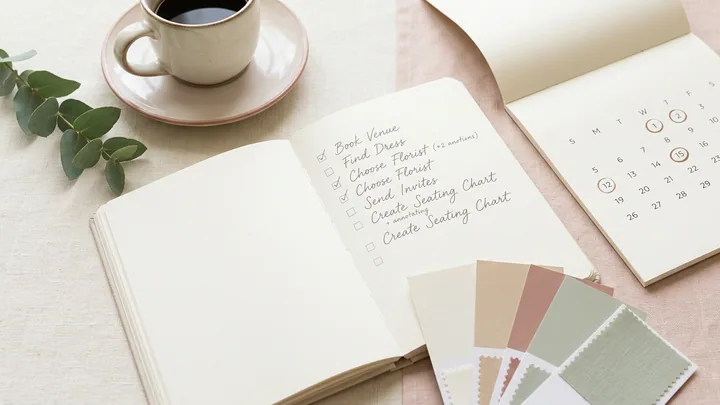
Wedding planning
How to Plan a Wedding Step by Step — Guide
The engagement buzz has faded, the emotions have settled, and the first sober question arrives: "Where on earth do we start?". A wedding is one of the biggest projects you'll ever organise: dozens of decisions, a dozen or so suppliers, scores of guests, and a budget running into the tens of thousands of euros. It sounds overwhelming, but there's an order to it. If you follow the steps instead of jumping between topics, planning transforms from chaos into a simple to-do list you can tick off.
This guide is your gateway to getting it all organised. We'll walk you through every stage, from setting a budget and guest list, through choosing a venue, handling the legalities and booking suppliers, right up to the wedding day itself. At each step, we'll point you to a detailed guide or tool for a deeper dive. At the end, you'll also find a ready-made step-by-step timeline: from 12 months before the wedding right up to the big day.
The Golden Rule: Your Budget and Guest List are the Foundation
Before you fall in love with a specific venue or start picking out tablecloth colours, you need to establish the two things that influence everything else: how much you can spend and how many people you want to invite. These two numbers drive the entire plan: because it's your guest list multiplied by the cost per head that makes up the largest chunk of your budget.
Start with an honest conversation about money: how much you have saved, how much you can put aside each month, and whether your parents are contributing. Next, draw up a preliminary guest list: even a rough one will do. The difference between 80 and 130 people can often mean a difference of tens of thousands of euros, so it's the list, not individual items, that determines the scale of your celebration.
To see how the costs break down, take a look at our guide on how much a wedding costs. It shows realistic price ranges for 2026 and which items eat up the most of your budget. The easiest way to plug in your own figures is with our wedding budget calculator: just enter your guest count and your own quotes to see the total instantly. Do this exercise as early as possible: it will save you from planning a wedding you simply can't afford.
Choosing a Date and Venue
With a budget and a rough guest count, you can start looking for a date and venue, and it's usually the venue that dictates the date, not the other way around. The best locations get booked up a year, sometimes eighteen months, in advance, especially for Saturdays in peak season (May–September).
When choosing a venue, pay attention to:
- Capacity: will your guest list fit comfortably, with enough room for a dance floor and a kids' area?
- Price per head and what's included: the menu, drinks, whether alcohol is part of the package or an extra cost.
- The date: Fridays, Sundays, and off-peak months can be significantly cheaper and offer more room for negotiation.
- Logistics: transport for guests, accommodation on-site or nearby, and what time the party has to end.
Remember, a venue 40–50 km outside a major city can lower the cost per head by €25–€35. With 120 guests, that's a saving of several thousand euros. We've gathered all the costs you need to consider besides the venue itself in our breakdown of wedding costs and legalities.
The Legal Bit: Registry Office, Church, Documents
At the same time as booking your venue, sort out the legalities: because dates at the registry office and church get booked up too. The order of things here depends on the type of ceremony you're having:
- Civil ceremony: book a date at the Registry Office and gather your documents (passports/ID cards, any necessary birth certificates). If you want an outdoor ceremony, ask the Registry Office if this is possible and what the additional fee is.
- Religious ceremony (with legal effect): visit your parish, attend a pre-marriage course, and get the necessary documents from the Registry Office. This process is spread over several weeks, so don't leave it to the last minute.
- Other religious or humanist ceremony: these have their own requirements and timelines, which are worth looking into early on.
We cover all the official fees, church costs, and deadlines you need to know about in our detailed guide to wedding costs and legalities. It's a great checklist to make sure you don't miss anything.
Suppliers: Photographer, DJ, Catering, and the Rest
Once you have a date, it's time to book your suppliers: and again, the rule is "first come, first served". The best photographers, videographers, and bands have their diaries full a year in advance.
The most important ones to book first are:
- Photographer and videographer: they're the ones who will capture a day that can't be repeated. Make sure to look at their full wedding galleries, not just a portfolio of "best shots".
- Music: a live band or a DJ. They create the energy for the evening, so listen to their demos and check reviews.
- Catering / venue menu: if the venue doesn't have its own kitchen.
- Cake, florist, decorator, transport, accommodation: the next layer of suppliers to finalise after the main ones are booked.
For every supplier, sign a contract that clearly outlines the scope of work and the deposit paid. It keeps the collaboration organised and protects both parties. You'll also find a list of supplier expenses broken down in our guide on how much a wedding costs.
Save the Dates and Invitations
When the date and venue are confirmed, it's time to let your guests know. A two-step approach works best here:
- Save the Date: a short announcement sent well in advance (usually 6–8 months, or even earlier for guests from abroad). The goal is simply to get guests to block out the day. We explain how to do it right in our Save the Date guide.
- The official invitations: sent 6–8 weeks before the wedding, with all the details: location, time, travel info, and an RSVP request.
More and more couples are opting for digital wedding invitations instead of paper ones: they're cheaper, faster, and can be easily updated if anything changes. Crucially, an invitation with a QR code leads guests straight to a wedding website with a map, timeline, and RSVP form. In souveil, the invitation and wedding website are part of the same app: your guest scans the code, sees everything in one place, and can RSVP without installing a thing.
RSVP: Collect All Your Replies in One Place
The biggest headache in wedding planning is often chasing RSVPs. Phone calls, texts, chat messages, "I'll get back to you later". And suddenly, two weeks before the wedding, you don't know if you're expecting 95 or 115 people. And you're paying for every reserved seat, whether the guest shows up or not.
That's why it's worth collecting replies in a way that doesn't let anything slip through the cracks. A digital RSVP lets guests click "attending / not attending" in a form, add information about dietary needs or a plus-one, and lets you see the up-to-date numbers in one place. That's how online RSVP works in souveil: replies flow automatically into your guest list, so you always know who's coming and can give the venue a real number of plates instead of a guess.
This isn't just about convenience: it's about saving money. An accurate RSVP count can save you several thousand euros that you won't spend on empty, paid-for seats.
The Seating Plan: Arranging Your Guests
Once the RSVPs are in, you face one of the trickiest organisational tasks: seating your guests. Who sits with whom, who goes next to family, where to put your university friends, and how to separate feuding cousins: it's a puzzle that can take up several evenings.
Start with a strategy: how to group people, where to place the top table, and how to arrange older guests and children. You'll find practical tips in our guide on how to seat your wedding guests, and layout examples in our wedding seating plan guide.
The easiest way to create the plan is digitally, by dragging and dropping guests between tables instead of rewriting lists on paper. That's what the online seating plan and the seating plan tool in souveil are for. And because it uses the same guest list as your RSVP, any change in confirmation is instantly reflected in the layout. No rewriting, no discrepancies between spreadsheets.
Menu and Alcohol
You'll usually finalise the menu with your venue or caterer: a tasting a few months before the wedding is standard, and it's well worth doing. Think about options for guests with dietary requirements (vegetarian, vegan, gluten-free) and a separate, lighter menu for children.
A separate topic is alcohol. If your venue allows you to bring your own, you can save a lot: but you need to calculate the right amount so you neither run out nor are left with cases for the next six months. We give you tips on how much of what to buy depending on your guest count in our guide on how much alcohol for a wedding, and you can get a ready-made calculation with our alcohol calculator. Just enter the number of guests and your preferred ratios, and the tool gives you specific quantities.
Decorations and Wedding Style
Around the same time, it's a good idea to lock in your wedding style: because it influences the decorations, flowers, stationery, and often the dress code. Choose a leading colour palette and a theme that will run through everything from the invitations to the place cards on the tables.
You'll find inspiration and specific ideas for decorating the venue, tables, and photo area in our wedding decorations guide. If you're dreaming of a specific vibe, like natural, relaxed, with lots of greenery and pampas grass, check out our guide to a boho wedding, where we show you how to pull the style together without overdoing it or breaking the bank.
Day-Of Timeline and Reception Schedule
The closer you get to the date, the more important the wedding day timeline becomes: a minute-by-minute plan from the bride's preparations, through the ceremony and photo session, to the different courses, the first dance, and the cake. A good day-of plan coordinates all your suppliers: the photographer knows when you're getting ready, the DJ knows when the evening entertainment begins, and the venue knows when to serve the meals.
We explain how to create such a plan and how much time to allocate for each part in our wedding day timeline guide. You can put together a ready-made schedule with our timeline generator. Enter the times for key moments, and the tool will create a coherent timeline for the day that you can send to your suppliers.
It's also worth planning the reception schedule: which wedding traditions you want to keep and which to skip, what wedding games to include between courses, and whether to add any extra wedding entertainment, from a photo booth to a special performance or dry ice for the first dance.
The Final Week Before the Wedding
This is the time for finalising, not starting new things. In the last week:
- Give the venue the final guest count: the exact number, based on your collected RSVPs.
- Confirm timings with all your suppliers: photographer, band, transport, florist, cake maker.
- Finalise the seating plan and print the place cards and the main seating chart.
- Prepare an envelope with cash for any final payments and tips on the day.
- Pack an emergency kit: plasters, a needle and thread, painkillers, a phone charger, spare tights.
- Appoint a point person (your maid of honour, best man, or a close friend) for suppliers to call, so you can focus on yourselves.
If you keep your invitations, RSVPs, seating plan, and timeline in a single wedding app, this week will be much calmer: all the current information is in one place, not scattered across five different files and chat threads.
The Wedding Day
The most important piece of advice is this: on the day, you're not the organisers: you're the ones celebrating. All the hard work has been done. Hand over the to-do list and supplier contacts to your designated person, stick to the timeline, but give yourself permission to relax if something runs a minute or two off schedule.
Just take care of a few small things: eat breakfast, have water with you, and give your phone to someone you trust. And to make sure the memories aren't just in your heads, set up a shared photo gallery with a QR code where guests can upload pictures from their phones. In souveil, this is part of the same app: a guest scans a code on their table and adds their photos, giving you a complete report from everyone's perspective in one album.
Step-by-Step Timeline: From 12 Months to the Wedding Day
Here is a condensed timeline for your preparations. Treat it as a checklist to tick off, and for each stage, refer back to the relevant section above for more details.
12–10 Months Before
- Establish your budget and preliminary guest list (how much a wedding costs, budget calculator).
- Choose and book your venue and date.
- Start the legal paperwork with the Registry Office or your parish (wedding costs and legalities).
9–7 Months Before
- Book key suppliers: photographer, videographer, music/entertainment.
- Send out your Save the Dates (save the date guide).
- Decide on a preliminary style and colour scheme for the wedding (wedding decorations, boho wedding).
6–4 Months Before
- Finalise other suppliers: cake, florist, decorator, transport.
- Plan the menu (attend a tasting) and alcohol (how much alcohol for a wedding, alcohol calculator).
- Prepare your wedding website and invitations with a QR code (wedding website).
3–2 Months Before
- Send out invitations and open up your RSVP (rsvp guide, online RSVP).
- Plan the reception schedule and entertainment (wedding traditions, wedding games, wedding entertainment).
- Start working on the seating plan (how to seat your wedding guests, online seating plan).
1 Month Before
- Collect all RSVPs and finalise the seating arrangement (seating plan tool).
- Create the day-of timeline (wedding day timeline, timeline generator).
- Final dress/suit fittings, hair and makeup trials, last-minute adjustments.
The Final Week
- Give the final guest count to the venue, confirm timings with suppliers, print place cards.
- Prepare an envelope for payments, pack your emergency kit, and appoint a point person.
The Wedding Day
- Breakfast, water, phone with a trusted person.
- Stick to the timeline, and enjoy your day.
Frequently Asked Questions (FAQ)
Where do you start with wedding planning?
Start your wedding planning by setting a budget and creating a preliminary guest list: these two numbers determine everything else. Only once you have them should you book a venue and date, followed by your suppliers. Our guide on how much a wedding costs and our budget calculator can help you understand the real scale of expenses for your guest count.
How far in advance should you plan a wedding?
It's best to start planning a wedding 10–12 months in advance, as the best venues and suppliers get booked up a year ahead, especially for Saturdays in peak season. It's still possible on a shorter timeline, but your choices will be more limited. It's also wise to handle the legalities with the Registry Office or your parish early on, at the same time as booking your venue.
What's most important when organising a wedding?
The most important elements are the budget, the guest list, and booking the venue and date: these decisions shape all the ones that follow. Right behind them are your key suppliers (photographer, videographer, music) and getting accurate RSVPs from your guests, as this determines the real cost of the reception. Everything else, like decorations and the schedule, can be finalised later.
How can you manage the guest list, RSVPs, and seating plan in one place?
The easiest way is to use a single wedding app, where replies from your online RSVP automatically update your guest list and seating plan. That's how souveil works: an invitation with a QR code takes your guest to a wedding website where they can confirm their attendance, and you see the numbers in real-time and can arrange the seating without re-typing any data.
How much does it cost to organise a wedding in 2026?
The cost of a wedding in 2026 depends mainly on the number of guests and the price per head: together, this is usually the largest part of the budget. We break down the detailed price ranges, items, and calculation methods in our guides on how much a wedding costs and wedding costs and legalities, and you can calculate your own total with our budget calculator.
Planning a wedding and lost in spreadsheets? With souveil, you can bring your invitations, RSVPs, seating plan and photo gallery together in one wedding app: one place instead of five tools. One package is €99 EUR as a one-off payment, with no subscription, and your guests can use it without installing a thing.