Wedding planning
Wedding Seating Chart: A Step-by-Step Guide
Mapping out your venue layout and deciding how to seat guests at your wedding is often that one task couples put off indefinitely. Later, they deeply regret it — a week before the big day, they're trying to reconcile feuding family members and squeeze ten people around an eight-person table. The sooner you tackle this logistical puzzle, the less stress you'll experience in the final stretch. We'll guide you through the entire process — from a blank page to a ready-to-display seating chart at the entrance.
Where to Start — Before You Tackle Your Seating Plan
A common mistake is to start creating your seating plan using a working guest list from a year ago. Only begin assigning seats once you have your final list, verified by RSVP. Even two unexpected declines can completely disrupt a perfectly arranged round table for university friends.
Once you're certain about the number of wedding guests, contact your venue manager. Ask for a precise floor plan — complete with dimensions, dance floor, kitchen entrance, and any pillars. Find out how many guests can comfortably fit at each table. Don't rely on optimistic estimates — if twelve people can just fit, ask for ten chairs. Only with the floor plan and numbers in front of you should you start assigning names.
Rule Number One — Group, Don't Mix
The golden rule: guests have the most fun with people they know and feel comfortable with. Your wedding breakfast is not the time for forced integration or experimenting with random members of both families.
Group people into natural blocks. The bride's immediate family on one side, the groom's family on the other. University friends at one table, colleagues at another, school friends together in a corner. The exception is guests without a plus-one or friends who don't know anyone else from the other side. In these cases, a 'singles' table or a mixed table of chatty friends can be a brilliant idea.
Who Sits Where — Table Hierarchy
First, decide on the shape of your top table, where you'll be seated. Popular options include sitting as a couple — which offers a lot of freedom — or traditionally with your witnesses (best man/maid of honour) and their partners. It's becoming less common to seat parents at the top table.
Seat your parents closest to your table, on the appropriate sides (bride's family on the bride's side). Position grandparents strategically. Ensure they have easy access to exits and toilets. Make sure their spot is at the opposite end of the room from the band's or DJ's speakers. For the youngest guests, plan a table with separate entertainment or add high chairs to their parents' tables.
Rectangular vs. Round Tables — Which to Choose?
Choosing between continuous banquet tables and separate round tables is a compromise between your Pinterest vision and the venue's floor space.
Round tables are more conducive to group conversations — every guest has eye contact with everyone else at the table. However, they take up more space and can reduce the dance floor area.
With rectangular tables, remember they can accommodate more people in a smaller space, but they can hinder conversation across the table. A practical rule: one section for 8–10 people. For smaller weddings of up to 50 guests, a U-shaped arrangement works well.
Tricky Situations — How to Resolve Them
- Divorced Parents at Odds: This is always tricky territory. Avoid forcing them to interact – seat them at completely different tables, on opposite sides of the room, ensuring they maintain the same level of prestige (e.g., the same distance from the top table).
- Former Partners: If your guest list includes ex-partners, ensure there's a significant distance between their seats. This minimises the risk of awkward encounters by the coat rack.
- Significant Family Disparity: Sometimes the bride invites sixty people, and the groom thirty. Stop drawing an artificial line down the middle of the room. Spread the bride's guests across tables on the other side too. Eventually, everyone will be up dancing anyway.
Tools for Planning Your Seating
Most couples rely on the tried-and-tested method of yellow sticky notes on a large canvas drawn with a marker. This visualisation allows you to physically and easily move names from one "island" to another when you realise Auntie Anna can't sit with her back to the stage.
If you prefer digital solutions, a Google Sheet with columns representing tables does the job. If you've already collected RSVPs using a digital wedding app, all your guest data will be in the same programme. From one dashboard, you can transfer your guest list directly to the plan, with notes about vegan diets attached to specific chairs.
When Should Your Final Seating Plan Be Ready?
Your printed seating arrangement should be finalised at least two weeks before the wedding. Why so early? Firstly, you need to provide the layout to the venue staff so they know where to deliver vegetarian meals and place a high chair for a two-year-old.
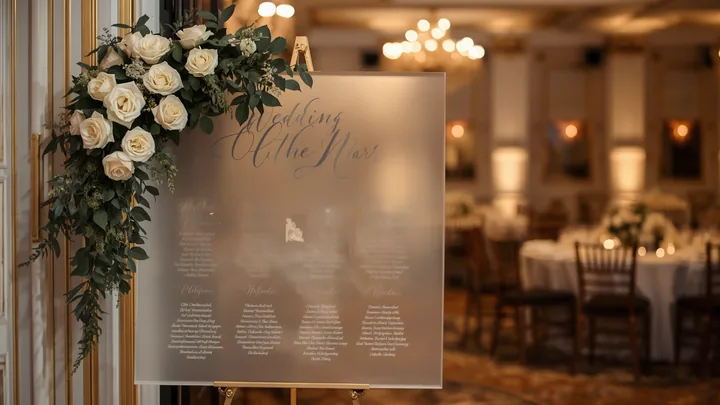
Secondly, based on these arrangements, you'll order the printing of place cards for each setting and a large display board to stand at the entrance to the reception room.
If you prefer a "tool-first" approach, start with a ready-made wedding seating plan with table shapes and a printable checklist. Then, incorporate the finalised layout into your wedding timeline so the staff knows when guests will be taking their seats.
Frequently Asked Questions (FAQ)
Do the Newlyweds Have to Sit at a Separate Table?
No. A popular solution is to blend in with your guests and sit at one of the larger tables with your witnesses and friends. A separate, two-person "sweetheart table" is an option for those who want a bit of privacy.
How Many People Fit at a Round vs. Rectangular Table?
Round tables with a diameter of 180 cm comfortably seat up to ten people. 150 cm tables accommodate eight guests. For rectangular tables, it's generally assumed that each person requires a minimum of 60 cm of table width.
What if a Guest Didn't RSVP but Still Showed Up?
This is every wedding venue's nightmare. However, staff are usually prepared — they'll have two or three extra place settings in reserve. Such a guest can be discreetly seated at the end of a rectangular table or have a chair added to a round table.
Do Children Count Towards the Table Limit?
Older children who eat independently occupy full place settings and count towards the limit. Toddlers eating from laps or high chairs might not be included in the maximum table density.
What's the Latest You Can Change Your Seating Plan?
You can make minor, cosmetic changes up to 7 days before the event — provided they don't affect an already paid-for welcome board. Changes three days before the wedding can cause chaos between the caterers and the team distributing place cards, so stick to your final decisions.
Collecting RSVPs and planning your seating arrangement? With souveil, you have all your guest data in one place — from attendance confirmations to dietary needs and transport details.