Wedding inspiration
Boho Wedding Style & More: A Complete Guide
Pampas grass in a large wicker basket, a linen tablecloth rustling in the breeze, a string of festoon lights above a wooden table, and a bride in a flowing, corset-free dress — that's the image of a boho wedding for most couples. And for good reason, as it's one of the most popular styles out there. But boho isn't the only path: rustic, glamour, classic, minimalist, or vintage can be just as beautiful if they feel like you. In this guide, we'll break down the boho style first, then quickly run through the others, and finally, show you how to choose the right one and keep it consistent — from your invitations to your venue decor.
The Boho Wedding: What Exactly Is This Style?
Boho (from "bohemian") is a style that draws on nature, freedom, and artistic flair. It's not about perfect symmetry or opulence, but about a warm, slightly nonchalant atmosphere where everything looks as if it came together spontaneously — even though it's been carefully planned. A boho wedding should feel like your guests have stumbled upon a dream picnic in a meadow at sunset.
The key principle of boho is: nature, texture, imperfection. Materials should be authentic (linen, wood, wicker, twine), colours should be muted, and arrangements should be loose. If you're wondering whether something fits the boho aesthetic, ask yourself: does it look natural and warm, or stiff and polished? Boho always chooses the former.
Boho Wedding Colours
The boho palette is muted and earthy. The foundation is built on beiges, ecru, creams, sandy browns, and shades of terracotta. These are complemented by muted dusty pinks, rusty orange, subdued greens (sage, olive, eucalyptus), and off-white. Accents can be warmer — mustard, burgundy, terracotta — especially for autumn weddings.
What to avoid? Strong, bright colours and cold, "digital" shades (like hot pink, neon green, or electric blue). Boho thrives in the light of the sun and candles, so the palette should look good in warm, golden light.
Flowers: Pampas, Dried Blooms, and Wild Bouquets
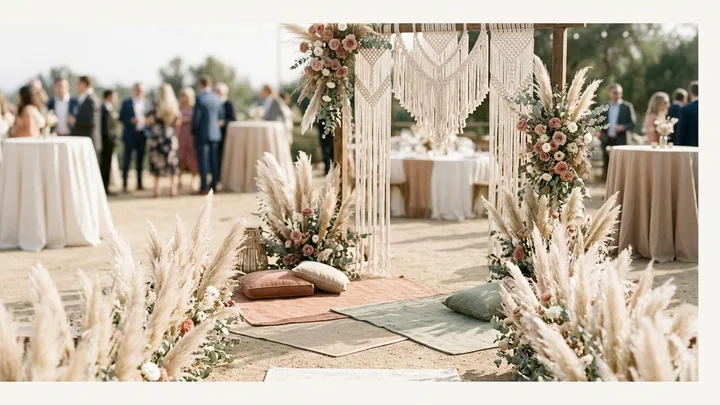
This is the hallmark of the style. Pampas grass (with its fluffy, cream-coloured plumes) has become a symbol of boho — it looks fantastic in tall vases, on wedding arches, above the top table, or as a photo backdrop. Alongside it, dried flowers reign supreme: lagurus ("bunny tails"), wheat sheaves, eucalyptus, statice, and unbleached limonium.
Boho bouquets are loose, asymmetrical, and look "as if just picked from a meadow". Instead of a tightly packed ball of flowers, think of a sprawling, natural composition with long, freely cascading leaves and ribbons of raw silk or linen. Wildflowers and seasonal blooms work perfectly: nude-toned roses, lisianthus, Queen Anne's lace, and thistles.
Materials and Textures
Texture makes all the difference in boho. Opt for:
- Linen and cotton — table runners, napkins, and tablecloths in natural shades.
- Wood — raw planks for tables, log slices as coasters, wooden table number signs.
- Wicker and rattan — baskets, chairs (like the iconic "peacock" chair), lanterns, and openwork screens.
- Macramé — backdrops behind the couple's table, hanging decorations, and chair adornments.
- Candles — lots of them, in glass holders, lanterns, and strings of festoon lights (or retro bulbs) that give off a warm glow.
Boho Decor: From the Arch to the Tables
The centrepiece is often a wedding arch or a circular frame adorned with pampas grass, dried flowers, and greenery — perfect for an outdoor ceremony or as a photo spot. On the tables: low, sprawling arrangements interwoven with trailing greenery, candles of varying heights, and elegant but "effortless" place settings. Rugs and cushions in a chill-out zone, macramé hangings, wicker lanterns along pathways, and handwritten wooden signs for the order of the day. You'll find plenty of ideas on how to bring these elements together in our post on wedding decorations.
Boho Wedding Attire
A boho bride typically chooses a flowing dress made from light fabrics like lace, muslin, or silk — often with an open back, a slit, or wide, bell-style sleeves. Instead of a stiff veil, consider a crown of dried flowers, a delicate headband, flowers woven into the hair, or a loose updo with stray tendrils. Shoes? Sandals, or even bare feet in a meadow.
The boho groom goes for a relaxed look: a linen or cotton jacket in a warm shade (beige, olive, brown), often without a tie, with an open collar, braces, and perhaps a bow tie. Guests are also happy to embrace the vibe — so it's a good idea to suggest a colour palette in your invitation.
The Venue: Barns, Outdoors, and Orchards
Boho breathes best outdoors or in raw, natural interiors. The most common choices are barns (with exposed wooden beams), outdoor settings — a meadow, an orchard, a vineyard, a lakeside — or a marquee/frame draped with linen curtains. If the wedding is in a classic venue, you can build the atmosphere with decor: macramé, warm lighting, pampas grass, and by concealing any "stiff" interior elements.
The outdoor nature of boho lends itself to relaxed, natural entertainment — a bonfire, deckchairs, lawn games, a cocktail station. For ideas that fit this vibe, check out our post on wedding entertainment.
Other Wedding Styles: A Quick Overview
Boho is just one of many directions you can take. Here are the other popular wedding styles to choose from — each with its own character, palette, and atmosphere.
Rustic Weddings
Boho's closest cousin, but more "countryside" and cosy than artistic. A rustic wedding is all about wood, linen, wildflowers, jam jars, twine, burlap, and the quintessential barn or old manor house. The palette is warm and natural, but you'll more often see classic flowers (roses, gypsophila, sunflowers in summer) and "grandma's house" touches — lace doilies, enamelware, and wooden crates.
The difference from boho? Rustic is more traditional and sentimental, while boho is more ethereal and design-led. In practice, many weddings blend both into a "boho-rustic" style.
Glamour Weddings
The opposite of natural ease — here, opulence, sparkle, and Hollywood-ball elegance rule. A glamour wedding means gold and silver, crystal chandeliers, mirrors, tall floral arrangements, velvet, sequins, and an abundance of candles in elegant holders. The palette is based on deep, rich colours (navy, bottle green, burgundy) with metallic accents, or a classic white and gold.
This style is for couples who love to make an impression and feel at home in a sophisticated, unapologetically lavish setting. It works beautifully in palaces, hotels, and spacious, elegant venues.
Classic / Elegant Weddings
A timeless, safe choice that will never go out of style. A classic wedding focuses on white, rose red, and green, with symmetry and traditional elegance — white tablecloths, porcelain, classic bouquets, and understated, polished decorations. No extravagance, but with meticulous attention to detail and quality.
This is the style for couples who want to avoid fleeting trends and opt for an elegance that will look just as good today as it will in photos twenty years from now. It suits most venues and church ceremonies.
Minimalist Weddings
Less is more. The minimalist style is based on clean lines, plenty of space, a limited palette (usually white, black, beige, and one accent colour), and simple, geometric forms. Decorations are sparse but deliberate: single stems of flowers, elegant candles, modern typography, and a distinct lack of clutter.
This is the choice for couples with a modern, design-oriented taste who prefer quality over quantity and feel comfortable with simplicity. It looks fantastic in modern, raw interiors (concrete, glass, lofts).
Vintage Weddings
A journey into the past — to the 20s, 50s, or 70s, depending on your preference. A vintage wedding features old furniture, grandmother's china, a gramophone, trunks, typewriters, and a sepia or pastel, slightly faded colour palette. The atmosphere is built with items that have a soul and a story, often borrowed or inherited.
This is a style for sentimental couples who love retro aesthetics and want their wedding to feel like it was "found in the attic, lovingly restored". It can easily be combined with rustic or boho, but you can also go for a more distinct, Art Deco glamour from the 1920s.
How to Choose a Wedding Style That's Right for You
Your wedding style shouldn't be a trend copied from Pinterest, but an extension of who you are. Before you decide, ask yourselves a few questions:
- What are you like day-to-day? Do you love a relaxed, natural vibe and bare feet, or do you prefer elegance and making an impression? Your wedding style should feel like you, not a costume for a day.
- What's your venue? A barn or outdoor space begs for a boho or rustic theme; a palace or hotel calls for glamour or classic; a loft is perfect for minimalism. Start with the venue, as it sets half the mood.
- What's the season? Summer and autumn are great for the warm palettes of boho and rustic styles; winter lends itself to glamour and deep colours; spring is perfect for pastels and classic themes.
- What's your budget? Glamour and lavish floral arrangements can cost more than minimalism or a boho style based on dried flowers (which also have the advantage of not wilting and can be prepared in advance).
- How do you feel when you look at photos? Create a shared inspiration board. If one of you keeps pinning pampas grass and the other chandeliers, that's an important conversation to have before you book a decorator.
You don't have to stick to one label. Many of the most beautiful weddings are a conscious mix — "boho-rustic," "minimal glamour," "classic with a vintage twist." The important thing is that the elements you choose work together to tell one story.
How to Keep Your Style Consistent — From Invitations to Decor
Even the most beautiful style loses its impact when every element of the wedding speaks a different language: a glamour-style invitation, a wedding website from a generic, colourful template, and boho decorations. Guests experience the wedding as a whole, so consistency isn't a detail — it's the foundation.
Here's how to maintain one style at every stage:
- Establish your palette and theme early on. Choose 3–4 colours and one or two key motifs (e.g., pampas grass + macramé for boho). Everything else should relate to them.
- Start with the invitations. This is your guests' first contact with your wedding — the paper, font, colours, and graphics should set the tone for the day. If you're looking for the right words to match your style, check out these wedding invitation quotes.
- Stick to one typography. Using the same font on the invitation, place cards, seating plan, and menu makes a huge difference. Boho loves handwritten, calligraphic fonts; glamour prefers elegant serifs; minimalism favours clean, sans-serifs.
- Connect the digital and physical worlds. More and more couples have a wedding website, online RSVP, and a photo gallery. If they look like they're from a different fairytale than your venue decor, the consistency is broken. That's why your wedding website should have the same palette, font, and vibe as everything else — from the invitation to the gallery.
- Repeat your motif in the details. The same element (twine, a sprig of eucalyptus, a wax seal, a dried flower) appearing on the invitation, place card, napkin, and favour ties everything together into one thoughtful story.
Frequently Asked Questions (FAQ)
What are the characteristics of a boho wedding?
A boho wedding is a style inspired by nature, freedom, and artistic flair. You'll recognise it by its muted, earthy palette (beiges, terracotta, muted green), pampas grass and dried flowers, natural materials (linen, wood, wicker, macramé), loose "meadow-picked" bouquets, and flowing attire. It's most often held outdoors, in a barn, or in a marquee, with the warm glow of candles and festoon lights.
What colours suit a boho wedding?
The foundation is earthy colours: beige, ecru, cream, sandy browns, and terracotta. These pair well with muted dusty pinks, rusty orange, subdued greens (sage, olive, eucalyptus), and off-white. For autumn, warmer accents like mustard and burgundy work beautifully. Avoid bright, "digital" colours and cold tones, as they disrupt the natural, warm boho atmosphere.
What's the difference between a boho and a rustic wedding?
Both styles draw from nature and favour wood, linen, and wildflowers, but their character is different. Rustic is more traditional, "countryside," and sentimental — think jam jars, twine, burlap, and the vibe of an old barn or manor. Boho is more ethereal, design-led, and artistic — featuring pampas grass, macramé, asymmetry, and a sense of lightness. In practice, many couples combine them into the popular "boho-rustic" style.
Can a boho theme work in a traditional venue instead of outdoors?
Yes, though it requires more focus on the decor. In a classic venue, you can create a boho atmosphere with textiles and lighting: macramé backdrops, linen table runners, pampas grass and dried flowers in tall vases, the warm light of candles and festoon lights, and by concealing any "stiff" interior elements. If the venue is bright and spacious, the effect can be just as beautiful as in a barn.
How do we choose a wedding style if we have different tastes?
Start with a shared inspiration board — have each of you add images you like, and then look for common ground. You'll often find that you can combine your preferences into a hybrid style (like "minimal glamour" or "classic with a boho twist"). It also helps to start with your venue and budget, as they naturally narrow down the options. The most important thing is that the final style feels like you, not a compromise that neither of you loves.
Chosen your wedding style? Keep it consistent from the first click to the last photo. With souveil, your invitation, wedding website, RSVP, and gallery all share one cohesive design — your style, not five different templates.