Wedding inspiration
How to Plan an Outdoor Wedding
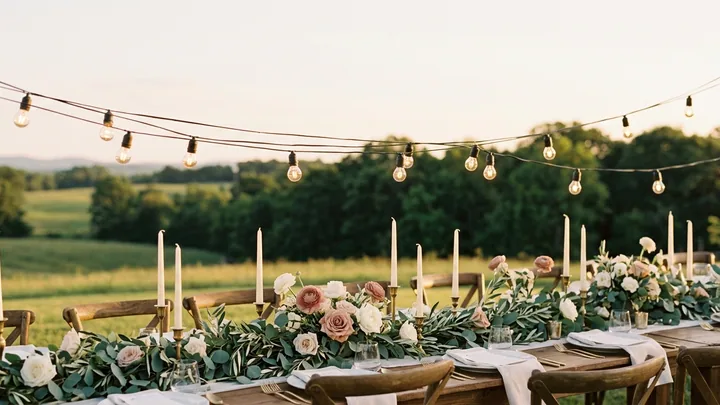
A long table under the branches of an old oak tree, festoon lights swaying in the breeze, a golden sunset over a meadow, and guests dancing barefoot on the grass. An outdoor wedding is a scene that has captured the hearts of countless couples. And it's no wonder: nothing builds a relaxed atmosphere quite like open space, natural light, and being close to nature. But behind that beautiful picture lies a host of decisions you don't face with an indoor venue: the weather, power, toilets, legalities, and dozens of other small details. In this guide, we'll walk you through everything: from the type of outdoor venue to the pros and cons, a weather backup plan, costs, and logistics.
Types of outdoor weddings
"Outdoor" isn't a single scenario, but a whole family of ideas. Each has a different vibe, different requirements, and different pitfalls. Before you start planning the details, it's worth knowing which direction you want to go in.
- Garden wedding — Most often in a back garden, at a country house, or at a hired property with grounds. Intimate, warm, and "at home". Pro: You often have a house, power, and toilets on hand. Con: Limited space and parking.
- Barn wedding — An iconic choice for rustic and boho styles. A timber frame, exposed beams, and a feeling of being "under a roof, but close to nature". Pro: The roof is a ready-made backup plan for rain. Con: You'll need to check the capacity of the electrical system and the acoustics.
- Woodland wedding — A forest clearing, romantic and mysterious, perfect for an intimate ceremony. Pro: A completely unique setting. Con: Usually a total lack of infrastructure, difficult access, and the issue of permits (most woodland is managed by public or private bodies).
- Waterside wedding — The shore of a lake or a riverbank, with the sunset reflecting on the water. Pro: Spectacular photo opportunities. Con: Midges, dampness, and the need to ensure guest safety (especially children) near the water.
- Vineyard wedding — Increasingly popular, elegant with a continental feel, set against rows of grapevines. Pro: A ready-made backdrop and often good facilities. Con: Can be more expensive and is highly seasonal.
Your choice of venue affects everything else: how much you'll pay, what you need to bring in, and how big your backup plan needs to be. That's why it's the first decision, not the last.
Pros and cons of an outdoor wedding
The allure of an outdoor wedding is strong, but it's best to go in with your eyes open. Here's an honest look at the balance sheet.
Pros
- A unique atmosphere and photos. Natural light, open space, and greenery create shots that no indoor venue can replicate. The golden hour at sunset is a photographer's dream.
- Freedom of design. An empty space is a blank canvas where you decide on the layout of tables, zones, and decorations, without being tied to a venue's existing decor.
- More space. Children have room to run around, adults have a place to catch their breath, and chill-out zones, a bonfire, or lawn games feel completely natural.
- A cohesive, on-trend style. Outdoor settings are a perfect match for boho and rustic aesthetics. You can read more about this in our post on the boho wedding.
Cons
- The weather. This is the biggest risk: rain, a heatwave, wind, or a chilly evening can throw a spanner in the works. Without a backup plan, an outdoor wedding is a gamble.
- Lack of infrastructure. Power, toilets, water, a kitchen area: these are standard in a venue, but outdoors, you often have to organise them from scratch.
- More logistics and hidden costs. Hiring a marquee, a generator, portable toilets, and transport can eat up the budget you thought you'd "saved" on a venue.
- Guest comfort. Insects, the sun, uneven ground, or the evening chill all need to be considered so your guests can enjoy themselves instead of battling the elements.
A weather backup plan — not an option, a necessity
Let's be blunt: in the UK & Irish climate, an outdoor wedding without a backup plan is asking for trouble. The weather can turn in an hour, and you don't want to be deciding whether to hire a marquee three days before the wedding when it's already too late.
The most common backup solutions are:
- A wedding marquee — The classic lifesaver. It can be the main reception space (with flooring, walls, and heating) or simply a shelter in case of rain. Book it well in advance, as they're in high demand during the wedding season.
- A covered area or barn — If you've chosen a barn or a venue with an outbuilding, you've got a roof included. This is often the most convenient backup plan, as it doesn't require setting up an extra structure.
- Gazebos and parasols — For smaller areas (like the bar or ceremony spot), pop-up gazebos and large garden parasols can work well.
- Heaters and blankets — For the evening chill, patio heaters and a basket of blankets are a must. It's a small touch your guests will remember.
The rule is simple: your backup plan should be ready to go, not invented in a panic. Agree in advance who makes the call to implement it and when (usually the coordinator or venue manager), and have the scenario written down.
Legalities and permits
This is where many couples stumble, as an outdoor setting is governed by different rules than a venue.
- An outdoor ceremony. In the UK and Ireland, the rules for legally binding ceremonies outdoors vary. In Scotland and Northern Ireland, it's quite flexible. In England and Wales, the law has recently changed to allow legal civil ceremonies to take place outdoors at licensed venues. A celebrant-led ceremony offers more freedom but isn't legally binding, so you'd need to do the legal part separately. A religious ceremony outside a place of worship is generally difficult and requires special permission.
- The land and its owner. Make sure you have the landowner's permission in writing. For woodland, this might be the Forestry Commission or a private estate; for parks, it's often the local council.
- Noise restrictions. Many areas have noise restrictions or curfews (often around 11 PM). A loud wedding in an open space could lead to complaints if there are neighbours nearby. Check the local council's rules beforehand.
- Licences and safety. Larger events may require a Temporary Event Notice (TEN) for selling alcohol or playing amplified music. Fireworks and sky lanterns are often banned in woodlands and near water due to fire risk.
- Insurance. It's wise to consider event insurance: the risks (e.g., equipment damage, injuries) can be higher outdoors.
Sort out the paperwork early. It's these details, not the decorations, that can bring the whole thing to a halt.
Outdoor decorations and style
Nature provides a backdrop that any venue would envy. The key is not to overwhelm it. Two styles reign supreme at outdoor weddings: boho (ethereal, natural, with pampas grass and macramé) and rustic (wood, linen, wildflowers, jam jars, and twine).
Tried-and-tested elements for outdoor decor:
- Festoon lights strung up over the dining area and dance floor. They create the magic after dark.
- A wedding arch decorated with greenery, flowers, or pampas grass as a backdrop for the ceremony and photos.
- Natural materials — linen table runners, bare wooden tables, log slices, wicker lanterns, and candles in glass jars.
- A chill-out zone — rugs, cushions, and deckchairs where guests can take a break from dancing.
Remember to be practical: wind is the enemy of light decorations outdoors. Opt for heavier elements, use clips to secure tablecloths, and protect candles inside lanterns. For more ideas on how to bring it all together, take a look at our post on wedding decorations.
Logistics — power, toilets, access, and sound
This is the "boring" part that determines whether the wedding is a success. In a venue, everything is provided; outdoors, you have to think of every detail.
- Power. The caterers, lighting, sound system, and coffee machine all need electricity. If there's no mains supply, you'll need a generator (ideally a "silent" one in a soundproofed casing) with enough capacity and fuel.
- Toilets. Luxury portable toilets with sinks and mirrors are now standard for outdoor weddings, a world away from festival loos. The number depends on your guest count (roughly 1 cubicle per 25–35 people).
- Access and parking. Outdoor venues can be in the middle of nowhere. Provide clear directions, signpost the route, organise a parking area on a field, and consider hiring a coach for guests from a central point; it's a lifesaver when there's no easy way to get home.
- Sound system. Sound dissipates in open spaces, so your DJ or band will need more powerful equipment than for an indoor gig. It's also worth using microphones for an outdoor ceremony so guests in the back row can hear your vows.
- Catering facilities. A field kitchen, a prep tent, access to water, and a place for refrigeration. Confirm all this with your catering company well in advance.
A practical tip: directions, a map, and the schedule are details guests will lose if they're only on a paper invitation. A wedding website helps here. On your souveil wedding website, you can add a map with directions, a link for navigation, the weather forecast, and an hour-by-hour schedule that guests can pull up on their phones without installing an app.
Guest comfort — insects, sun, and children
An outdoor wedding is judged by how your guests felt. Nature is beautiful, but it can also be a nuisance, so take care of the details.
- Insects. Midges and wasps are classic outdoor party crashers, especially near water and at dusk. Think about citronella candles, a basket of insect repellent for guests, and covers for the sweet table (wasps love cake).
- Sun and heat. Provide shade (a marquee, parasols, trees), and have water and lemonade readily available. On a hot day, don't plan the ceremony so that guests are sitting in direct sun for an hour.
- The evening chill. Even a hot day can end with a cool evening: patio heaters, a bonfire, and a basket of blankets make all the difference.
- Children and terrain. Water requires supervision, and stilettos and grass are a bad mix. Give your guests a heads-up in the invitation about the outdoor setting so they can wear comfortable shoes.
Small gestures (a blanket, insect repellent, a bottle of water, a pair of emergency flats) are the details that guests will remember as part of a "thoughtful, well-cared-for wedding".
The cost of an outdoor wedding
There's a myth that an outdoor wedding is cheaper than a venue. It can be, but only if you have a location with existing infrastructure. In a "blank canvas" field, the costs can quickly catch up with, and even exceed, a traditional venue, because everything that's included in a package now has to be hired separately.
What you need to budget for with an outdoor wedding:
- Marquee hire (with flooring, walls, lighting) — often one of the biggest single costs.
- A generator with fuel and an operator.
- Luxury portable toilets and their servicing.
- Outdoor catering with its own facilities (usually more expensive than an in-house team).
- Guest transport (a coach) and a more powerful sound system suited to an open space.
- The backup plan and small extras — heaters, parasols, wind-proof decorations.
Before you decide, make an honest spreadsheet comparing the costs of both options. We show you how to break down a full wedding budget in our post on how much a wedding costs, and cover the entire planning process in our guide on how to plan a wedding.
Seasonality — when to plan an outdoor wedding
The outdoor wedding season is short, and everyone knows it: which is why the best venues and marquees get booked up far in advance.
- June and September are the sweet spot: warm but not scorching, with long days and less risk of a heatwave than in high summer.
- July and August are the most popular months but bring the risk of heatwaves and sudden thunderstorms, making a marquee and shade even more essential.
- May and early October can be beautiful but unpredictable: evenings are cool, so heating is a necessity.
- Winter and early spring — a fully outdoor reception is probably out, but a ceremony on a crisp, sunny day followed by hot chocolate for your guests can be magical.
Book your venue and marquee at least a year in advance if you're aiming for peak season. The later you leave it, the less choice you'll have and the higher the prices will be.
And once you've gathered everyone under the open sky, think about how to save the photos from the whole day. Across a large area, pictures get scattered across dozens of phones. A QR photo gallery is the perfect solution: guests scan a code (on a place card, a welcome sign, or the wedding arch) and upload their photos to one shared album, from the ceremony in the meadow to the dancing under the stars at midnight.
Frequently Asked Questions
Is an outdoor wedding cheaper than an indoor venue?
Not always. An outdoor wedding is only cheaper if you're using a space with existing infrastructure. For a "blank canvas" wedding, you have to add the cost of a marquee, a generator, portable toilets, guest transport, and more expensive catering. These costs can easily match or even exceed the price of a traditional venue, so it's worth comparing both options in a spreadsheet before you decide.
What's the best weather backup plan for an outdoor wedding?
The most reliable backup plan is a wedding marquee with flooring, walls, and heating, or a venue that has a barn or outbuilding to provide a solid roof. Book your backup well in advance, not at the last minute. Additionally, prepare heaters and blankets for a cool evening, and ensure there's shade and plenty of water for a hot day. You should also decide who makes the final call on implementing the backup plan and when.
Can you have a legal civil ceremony outdoors?
Yes, in many places, it's possible to have a legally binding civil ceremony outdoors. In the UK and Ireland, the rules vary. It's generally straightforward in Scotland and Northern Ireland. In England and Wales, licensed venues can now host legal ceremonies in a designated outdoor space. This usually requires permission and an additional fee. A religious ceremony outside a place of worship is much more difficult and requires special dispensation.
What legalities and permits are needed for an outdoor wedding?
First and foremost, you need written permission from the landowner. You should also check local council regulations on noise restrictions and licensing, for example, for the sale of alcohol or for amplified music. It's also important to check any restrictions on fire, fireworks, or sky lanterns, which are often banned near woodland and water. Finally, it's highly recommended to get event insurance.
How do you ensure guests are comfortable at an outdoor wedding?
Provide protection from insects (citronella candles, repellent, covers for food), shade and water for hot weather, and heaters and blankets for the evening chill. Think about hiring luxury portable toilets, providing clear directions and parking, and ensuring children are safe, especially near water. It's also a good idea to mention the outdoor nature of the wedding in your invitations so guests can wear appropriate footwear for grass.
Planning an outdoor wedding? With a souveil wedding website, you can give guests directions, a map, and the schedule for the day. And with our QR photo gallery, you can collect pictures from the entire venue in one place.