Wedding inspiration
Wedding Cakes 2026: Trends, Prices & Tips
The wedding cake is one of those details guests remember long after the wedding—it combines flavour, visual drama, and the emotional moment of the first cut. At the same time, it can cause a few sleepless nights: how many tiers to order, how big a cake is needed for 100 guests, what it all costs, and whether it's even worth sticking to a classic when a tempting dessert table is also an option. In this guide, we'll walk you through the trends for 2026, specific calculations for size and portions, prices per slice and for the whole cake, popular flavours, fillings, and alternatives. It's all practical and packed with numbers, so you can talk specifics with your baker from the get-go.
Wedding Cake Trends for 2026
This year's wedding cakes are leaning towards natural aesthetics and less icing. Think less sugar lace, more texture and real ingredients. Here are the styles set to dominate the season.
Naked and Semi-Naked Cakes
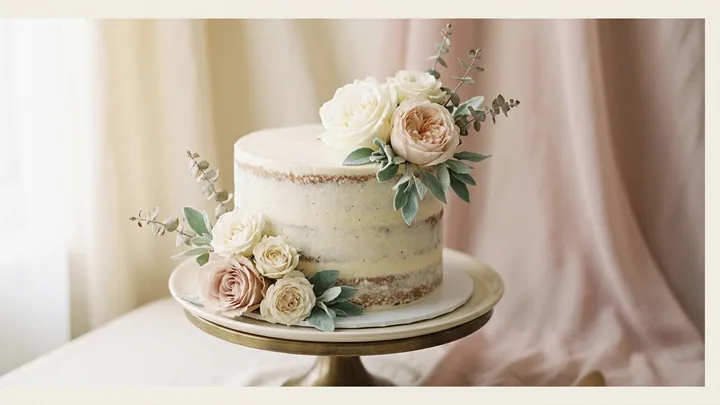
A naked cake has exposed sponge layers, with the filling either thinly scraped around the sides or only visible between the layers. The semi-naked version has a delicate, translucent layer of buttercream that allows the cake to peek through. Both styles are perfect for rustic, boho, and outdoor weddings, and they pair beautifully with fresh fruit and flowers.
Minimalist Cakes
Smooth, single-colour sides (usually white, ecru, or beige), free from unnecessary frills, sometimes with just a single accent—a sprig of greenery, a monogram, or a thin ribbon. Minimalism looks elegant in photos and suits modern venues and glamour-themed weddings.
Painted & Watercolour Cakes
Hand-painted cakes featuring delicate brushstrokes that mimic watercolour, marbled patterns, or streaks of gold leaf. This is a wonderful choice for couples who want something unique and artistic. It's often combined with a marble or terracotta effect.
Cakes with Flowers
Fresh flowers are still reigning supreme—ideally the same ones that appear in the bride's bouquet and wedding decorations for a cohesive look. Hand-crafted sugar flowers are also popular; they look lifelike and can be kept as a souvenir.
Colours for 2026
The natural palette reigns supreme: white, ecru, dusty rose, sage green, terracotta, and warm beige. Gold and copper accents add a touch of elegance for evening receptions. Bold, saturated colours (burgundy, navy, deep green) are making a comeback for autumn and winter weddings.
How Many Tiers & How to Calculate Cake Size
The most common question for any baker is: how big should the cake be? The answer depends on the number of guests who will actually have a slice. As a rule of thumb, assume the cake needs to serve 70–85% of your guests—some will opt for other desserts or will already be full.
A standard wedding cake portion is 80–120g (a slice roughly 2.5 × 5 cm at full height). If you're also serving a dessert buffet, you can aim for smaller portions.
Table: Guest Count vs. Cake Size
| Number of Guests | Cake Portions (~80%) | Suggested Tiers | Approx. Weight |
|---|---|---|---|
| 50 | approx. 40 | 2 tiers | 3–4 kg |
| 80 | approx. 65 | 2–3 tiers | 5–6 kg |
| 100 | approx. 80 | 3 tiers | 6–7 kg |
| 120 | approx. 95 | 3 tiers | 7–8 kg |
| 150 | approx. 120 | 3–4 tiers | 9–10 kg |
| 200 | approx. 160 | 4 tiers | 12–14 kg |
Remember: a tiered wedding cake is about visual impact as much as it is about serving guests. Couples often opt for a grander-looking cake (more tiers), and the baker makes up the extra portions with a "kitchen cake"—additional sheets of the same cake, cut behind the scenes. Your guests won't see it, but it increases the number of servings without enlarging the main structure.
Flavours and Fillings
Classic flavours are still a winning choice, but couples are increasingly combining two or three different flavours in separate tiers. The most popular options include:
- Vanilla sponge with fruit (strawberries, raspberries, peaches) and a light cream filling—a universal favourite that pleases all generations.
- Chocolate cake with chocolate cream or ganache—for those who love rich, intense flavours.
- Meringue cake with mascarpone cream and fruit—light, trendy, but requires the right conditions (it doesn't do well in the heat).
- Mascarpone cream with a fruit coulis—cuts through the sweetness with a touch of tartness.
- Regional and alcoholic flavours—a cake with a hint of Baileys, coffee, tiramisu, or cheesecake-inspired.
It's always a good idea to have a tasting session at the bakery before making your final decision. Most bakeries offer this for free or include the cost in your deposit. Don't forget to ask about options for guests with allergies (gluten-free, dairy-free)—it's becoming a standard offering.
How Much Does a Wedding Cake Cost?
Wedding cake prices are usually calculated per portion or per kilogram, with decorations and delivery as additional costs. Here are the estimated rates for 2026:
- Per portion: from €3 to €8, depending on the region, the bakery's reputation, and the complexity of the design.
- Per kilogram: from €20 to €45 for simpler cakes, and €50 or more for highly decorative structures.
- A whole cake for 100 guests: typically €250–€600, but for hand-painted or very elaborate designs, it can be €700 or more.
What Affects the Price?
- Decorations — Hand-crafted sugar flowers, painting, and gold leaf will increase the price the most.
- Number of tiers and structure — Taller cakes require internal supports and more labour.
- Fresh flowers — Sometimes supplied by your florist, sometimes by the baker at an extra cost.
- Region — Prices in major cities can be 20–40% higher than in smaller towns.
- Season — During peak season (May–September), popular bakers get booked up quickly and prices may be higher.
- Delivery and setup — A tiered cake is usually assembled on-site, which may incur an additional fee.
The cake typically accounts for 2–4% of the total wedding budget. If you're planning your expenses, check out our cost breakdown in the article on how much a wedding costs to figure out a reasonable amount to set aside for the sweet finale.
Cake vs. Dessert Table
Increasingly, couples are choosing not to pick one or the other, but to combine both, adjusting the proportions to fit their budget and the style of their reception.
- Just the cake — More elegant, creates a single focal point (the cutting ceremony), lower overall cost, and less to organise.
- Just a dessert table — Visually impressive and gives guests more choice, but lacks a ceremonial moment and is often more expensive per person.
- Cake + a smaller dessert table — The most common compromise: the cake is the star for the cutting ceremony, and the dessert table serves as a top-up later in the evening.
If you opt for a dessert table, remember that its presentation is also a key part of your wedding decorations—the table styling, labels, and lighting make a huge difference in photos.
Alternatives to the Classic Cake
Not every couple wants a traditional sponge and cream cake. Popular alternatives include:
- Drip cake — A cake with a "dripping" ganache effect (chocolate, caramel, or coloured icing), which is very photogenic and less formal.
- Cheese wheel cake (from artisan cheeses) — "Tiers" made from wheels of real cheese instead of cake, served with grapes, nuts, and honey. A huge hit at rustic-style weddings and for couples who prefer savoury to sweet.
- Meringue cake — Light, crisp, and filled with fruit and cream; an elegant choice, but it needs to be kept cool.
- A tower of eclairs, macarons, or doughnuts — An impressive pyramid of individual desserts instead of a single structure.
These alternatives often double as the dessert table, making them a clever way to combine both functions in one.
The Cake Cutting Ceremony and Photos
The cake cutting is a classic part of the evening—it usually happens later on, after the first dance and dinner, and signals that the party is in full swing. A few practical tips:
- Coordinate the timing with your DJ or band — It's best to announce the cake cutting so guests have time to gather around.
- Think about lighting — In the evening, a spotlight on the cake will ensure your photos aren't too dark.
- The first slice is cut by the couple together, hand over hand—it's a classic, much-photographed moment.
- Keep the decorative topper (figurine, flowers) as a memento.
This is also a moment worth including in your list of wedding entertainment—with a little creativity (a toast, a short speech, cake sparklers), it can become a mini-show rather than just a formality.
Crucially, the cake cutting is photographed from many angles at once—the couple's faces, guests' reactions, the detail of hands on the knife. Your photographer will capture one angle, but your guests standing around have dozens of other perspectives that usually get lost on their personal phones.
Frequently Asked Questions (FAQ)
How much does a wedding cake cost?
Roughly €3–€8 per portion or €20–€45 per kilogram for simpler designs. A cake for 100 guests typically costs between €250 and €600. For lavish decorations (handmade sugar flowers, painting, gold leaf), the price can be €700 or more. The decorations and number of tiers add more to the cost than the flavour itself.
How many tiers for a wedding cake for 100 guests?
Three tiers are usually sufficient, which provides about 6–7 kg of cake and serves around 80 guests (assuming about 80% of attendees will have a slice). If you want a more impressive structure, your baker can prepare a "kitchen cake"—extra sheets of cake cut behind the scenes to increase the number of portions without enlarging the visible part.
How big should a wedding cake be?
Start with your guest count and plan for an 80–120g portion per person, calculating for 70–85% of your guests. For 100 guests, that's about 6–7 kg. If you're also having a dessert table or a plated dessert with dinner, you can aim for the lower end of that range. Your baker will then determine the number and size of the tiers to match that weight.
Cake or dessert table — which should we choose?
If you want a ceremonial moment and a lower cost, choose the cake. If you prefer a variety of sweets and a big visual impact, go for a dessert table. The most common and safest compromise is a smaller cake for the cutting ceremony, supplemented by a modest dessert table for later in the evening.
When should you order a wedding cake?
It's best to order 4–6 months before the wedding. During peak season (May–September), you might want to book even earlier, as top bakeries have limited weekend availability. Aim to finalise the tasting and design 1–2 months before the date, once you have a good idea of your final guest count.
The cake cutting is one of the most beautiful moments of the evening — it’s a shame for it to live on in just a few people’s memories. With souveil, your guests can capture the moment from every angle by scanning a QR code on their table. All the shots land in a single wedding photo gallery right after the reception — no more chasing down photos from dozens of different phones.